定时器 Timer
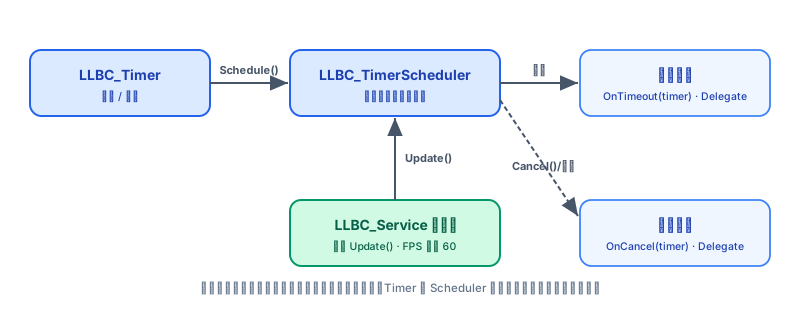
LLBC_Timer 是 llbc 的单体定时器类,支持单次触发与周期触发,通过 LLBC_Delegate
注册超时与取消回调。定时器不自驱动——它依附于一个 LLBC_TimerScheduler;
在 Service 逻辑线程内构造的定时器自动使用 Service 帧驱动的调度器,无需手动推进。
创建定时器
最简单的方式是直接栈构造或堆构造,再通过 SetTimeoutHandler 设置回调:
// 栈上创建,生命周期由当前作用域管理
LLBC_Timer timer;
timer.SetTimeoutHandler([](LLBC_Timer *t) {
    LLBC_PrintLn("timeout! triggered:%zu", t->GetTriggeredCount());
});

// 也可在构造时传入 delegate
LLBC_Timer timer2(
    [](LLBC_Timer *t) { LLBC_PrintLn("timeout"); },
    [](LLBC_Timer *t) { LLBC_PrintLn("cancelled"); }
);
若需在成员函数中使用,推荐对象方法重载:
class MyComp : public LLBC_Component {
    LLBC_Timer _heartbeatTimer;
public:
    int OnInit(bool &finished) override {
        _heartbeatTimer.SetTimeoutHandler(this, &MyComp::OnHeartbeat);
        _heartbeatTimer.Schedule(LLBC_TimeSpan::oneSec);
        return LLBC_OK;
    }
    void OnHeartbeat(LLBC_Timer *t) {
        LLBC_PrintLn("heartbeat #%zu", t->GetTriggeredCount());
    }
};
启动与取消
Schedule 有两个重载,分别接受 时间点(LLBC_Time)和 时间段(LLBC_TimeSpan)
作为首次触发时刻:
// 500 ms 后首次触发,此后每 1 s 触发一次,触发 5 次后自动停止
timer.Schedule(LLBC_TimeSpan::FromMillis(500),
               LLBC_TimeSpan::oneSec,
               5);

// period 缺省 zero => 使用 firstPeriod 作为重复周期
timer.Schedule(LLBC_TimeSpan::oneSec);          // 每秒一次,无限重复

// firstPeriod = zero => 下一帧立即触发,之后按 period 周期重复
timer.Schedule(LLBC_TimeSpan::zero, LLBC_TimeSpan::FromMillis(200));

// 按绝对时间指定首次触发(time >= LLBC_Time::Now())
timer.Schedule(LLBC_Time::Now() + LLBC_TimeSpan::oneSec * 3);

// 取消
timer.Cancel();
triggerCount 传 0 会被规整为 1(触发一次);默认值 LLBC_INFINITE 表示无限重复。
period 传 LLBC_TimeSpan::zero 时,实际周期等于 firstPeriod。
单次定时器
设置 triggerCount = 1 可实现”延迟执行一次”语义,触发后定时器自动停止调度:
auto *t = new LLBC_Timer;
t->SetTimeoutHandler([](LLBC_Timer *timer) {
    LLBC_Defer(delete timer);       // 触发后自销毁
    LLBC_PrintLn("one-shot fired");
});
t->Schedule(LLBC_TimeSpan::oneSec * 2, LLBC_TimeSpan::zero, 1);
超时回调与取消回调
两种回调均接收 LLBC_Timer * 参数,可通过 LLBC_Delegate 绑定 lambda、
自由函数或成员函数,也可子类化 LLBC_Timer 并重写 OnTimeout() / OnCancel():
class MyTimer : public LLBC_Timer {
public:
    void OnTimeout() override {
        LLBC_PrintLn("MyTimer timeout, id=%llu period=%s",
                     GetTimerId(), GetPeriod().ToString().c_str());
    }
    void OnCancel() override {
        LLBC_PrintLn("MyTimer cancelled");
    }
};
取消回调的触发时机:
- 外部调用
Cancel()时; - 在超时回调内调用
Cancel()时(此时IsHandlingTimeout()与IsHandlingCancel()同时为 true)。
timer.SetCancelHandler([](LLBC_Timer *t) {
    // 取消时 IsScheduled() == false
    LLBC_PrintLn("cancelled, wasHandlingTimeout=%d", t->IsHandlingTimeout());
});
在超时回调中重新调度
在超时回调内直接调用 Schedule 可安全地改变周期或切换回调:
timer.SetTimeoutHandler([](LLBC_Timer *t) {
    LLBC_PrintLn("first fire, switching to 100ms period");
    t->SetTimeoutHandler([](LLBC_Timer *t2) {
        LLBC_PrintLn("fast tick #%zu", t2->GetTriggeredCount());
    });
    // 重新调度后 IsHandlingTimeout() 立即变为 false
    t->Schedule(LLBC_TimeSpan::FromMillis(100));
});
timer.Schedule(LLBC_TimeSpan::oneSec);
查询定时器状态
timer.GetTimerId();            // 返回当前定时器 ID;从未调度(_timerData 为空)时返回 0,取消后仍返回上次分配的 ID
timer.GetFirstPeriod();        // 首次触发间隔
timer.GetPeriod();             // 重复间隔
timer.GetTotalTriggerCount();  // 总触发次数(LLBC_INFINITE 表示无限)
timer.GetTriggeredCount();     // 已触发次数(未调度时返回 0)
timer.IsScheduled();           // 是否处于调度中
timer.IsHandlingTimeout();     // 当前是否正在执行超时回调
timer.IsHandlingCancel();      // 当前是否正在执行取消回调
timer.GetTimeoutTime();        // 仅在超时回调中有效,返回本次超时的预期时间
携带用户数据
每个 LLBC_Timer 实例内置一个 LLBC_Variant 类型的数据槽,可存储任意值:
timer.GetTimerData() = 42;      // 存入整数

timer.SetTimeoutHandler([](LLBC_Timer *t) {
    int val = t->GetTimerData();  // 取回
    LLBC_PrintLn("data=%d", val);
});
与 Service 帧驱动的关系
LLBC_TimerScheduler::Update() 是定时器的驱动入口;
LLBC_Service 在每一帧的固定位置调用该函数,
因此 在 Service 逻辑线程内构造的定时器无需任何额外配置,
其精度取决于 Service FPS(默认 60)。
// Service 逻辑线程外(如自定义线程):需手动推进调度器
LLBC_TimerScheduler sched;
while (running) {
    sched.Update();
    LLBC_Sleep(1);
}

// 在 Service 线程中:构造即用,帧驱动自动推进
// new LLBC_Timer() 会自动关联当前线程的调度器
在非 llbc 风格线程(既非入口线程也非 Service 逻辑线程)中构造 LLBC_Timer
时,默认 scheduler 为 nullptr——此时必须在构造时显式传入一个自管理的
LLBC_TimerScheduler *,否则 Schedule() 会失败并返回 -1。
线程安全:LLBC_Timer 与 LLBC_TimerScheduler 均不是线程安全的;
定时器的所有操作(Schedule、Cancel、回调执行)必须在同一线程中进行。
参照
- 头文件:
llbc/include/llbc/core/timer/Timer.h、llbc/include/llbc/core/timer/TimerScheduler.h - 真实示例:
tests/func_test/comm/FuncTest_Comm_Timer.cpp - App 阶段定时器示例:
tests/func_test/app/FuncTest_App_AppTimer.cpp - 快速上手示例(可跑):
tests/example/core/Example_Core_Timer.cpp
下一步
- 委托 Delegate — 理解
LLBC_Delegate的绑定方式 - 时间 Time —
LLBC_Time与LLBC_TimeSpan常量参考